Tampilkan postingan dengan label National Geographic. Tampilkan semua postingan
Tampilkan postingan dengan label National Geographic. Tampilkan semua postingan
Rabu, 05 Oktober 2016
Video: Nat Geo Tells Us Why it is so Hard to Catch Poachers
As the world's population of elephants and rhinos wanes dramatically, many countries across the globe have stepped up their efforts to combat poaching in Africa and elsewhere. This is a battle that has been raging for sometime however, and yet we continue to hear how poaching is having a dramatic impact on the number of these creatures that roam the wild. Why is it so hard to stop these illegal activities? In this video from National Geographic Live, Naftali Honig – founder of the EAGLE Network – tells us why it is so hard to bring these people to justice.

Kamis, 29 September 2016
World's Deepest Underwater Cave Discovered in Czech Republic

For Starnawski it was a return to a cave that he had first dove into back in 1999. While there he had noticed that the limestone formations in the interior of the cave had formed in a unique and unusual way. This led him to believe that it might drop to a great depth, although he had no idea that it would be a record breaker. The cave was apparently created by hot water, rich with carbon dioxide, that was bubbling up from below. This makes the interior of the cavern unlike most others that he has explored in the past.
Over the past two years, the Polish diver has spent time searching the cave for clues as to just how deep it truly went. He discovered a narrow passage that gave him a glimpse of the deepest recesses of the cavern, but it wasn't until another diver found that that passage had widened that they could actually go further down. On Tuesday, the team dropped an automated ROV into the cave and maneuvered it to the bottom, accurately determining its depth in the process.
National Geographic has posted an interview with Starnawski about the process of exploring the cave, and what he and his team discovered inside. You can read his thoughts on the this 25+ year odyssey and just how he went about recording the depth of the cave, here.
It is stories like this one that remind us about how little we truly know about our own planet. I'm sure there are plenty of other discoveries just like this that we have yet to stumble across. It is also a reminder of how important exploration remains, even in the 21st century.
Selasa, 27 September 2016
Video: How Would You Describe America's National Parks?
In this video, photographer and filmmaker Corey Arnold traveled to America's national parks where he challenged the next generation of travelers and explorers to describe the landscape there. Some of their responses were surprising, others were revealing, and some were downright insightful. The result, is this short clip which not only includes lovely shots of the landscapes they saw, but these individuals sharing their thoughts on the natural spaces around them.
Nat Geo Gives Us the Best Outdoor Towns in the World

Some of the places earning a nod include towns that you would expect. Places like Moab, Utah and El Chaltén, Argentina. Others are a bit more unexpected, such as Niseko, Japan or Ely, Minnesota. It isn't as if those places weren't known for being great outdoor destinations, but to see them ranked amongst the very best (Nat Geo names nine places in total), is refreshing to say the least.
Each place is also accompanied by a nice description of why it deserves a spot on this very distinguished list with details on what it has to offer for visitors. Nat Geo even provided information on when it is the best time of the year to visit to take advantage of the opportunities that each place has to offer. For instance, summer can be hot in Moab, so September is a good time to go, although the author says not to overlook winter as well. Meanwhile, if you're planning on going to Niseko it is probably for the skiing, which is best between December and February.
Of course, with such a short list some places had to be left off, but there were a few surprises for towns that do not appear here. For instance, Chamonix, France is considered one of the great outdoor meccas of the world and yet it doesn't appear on Nat Geo's radar. Similarly, you could just as easily have substituted places like Boulder, Colorado or Jackson Hole, Wyoming, amongst other great mountain towns in the U.S. Still, the places that were selected are very deserving, and bring a nice exotic flair to the list with places like Australia, South Africa, India, and Peru enticing travelers.
To find out which places made the cut, read the entire list here. Then come back and leave a comment with the places that you think should have made the cut. After all, some of your favorite places probably didn't make it.
Senin, 19 September 2016
Video: Meet the World's First All-Female Anti-Poaching Team
The Balule Nature Reserve in South Africa a team of women called the Black Mambas has been training for the past three years to combat illegal poaching in the region. They are the first all-female squad to take on such a mission, with their main goal being to protect the wild elephants that roam the area. In this video, brought to us by National Geographic, we join the Mambas as they go out on patrol, searching for the hunters who are looking to kill the animals in the preserve where they work. The short film is an inspiring look at this team of dedicated and tough women who are looking to make a difference with Africa's wildlife. It is really an interesting story.
Jumat, 16 September 2016
Are You the 2016 National Geographic Nature Photographer of the Year?

The contest website says "We’re looking for photos that showcase the awe-inspiring and diverse natural world around us. That could be a powerful wildlife shot, a stunning landscape, or a look at a complicated environmental issue—whatever nature means to you." In other words, there is a pretty broad interoperation out there of what exactly Nat Geo means by "nature." I'm sure more than a few have you have captured some great images over the past 12 months that you can submit to the contest. Entries are begin accepted until November 4, after which a panel of judges will decide which photos are worthy of making the cut.
Of course, there are some great prizes for those who win the contest. Each of the categories – Landscapes, Animals, Action and Environmental – will have three winners. First place will be awarded $2500 in case, while second place will get $750 and a signed National Geographic book. The third place winner goes home with $500. But best of all, the Grand Prize finisher will receive a 10-day trip for two to the Galapagos Islands courtesy of Natural Habitat Adventures. I can't think of a better place to take more photos of nature than that destination.
As you would expect, competition is sure to be tough in this contest, but you just might have the wining photo sitting on your hard drive right now. Pick out your best and submit them for consideration. Who knows, you just might be on your way to the Galapagos in the near future.
Rabu, 31 Agustus 2016
Nat Geo Gives Us 20 National Park Leaders Under the Age of 30

The celebration will continue throughout the rest of the year, but it is also a time to begin looking forward to the next century. There is still a lot of work to be done to ensure that the national parks will be around for future generations to enjoy as well. To that end, National Geographic has selected 20 scientists, filmmakers, activists, and educators who have dedicated their lives to protecting the parks, both in the U.S. and abroad. Oh yeah, and each of these men and women happen to be under the age of 30 as well.
Amongst those making the list are Ben Masters, a filmmaker and horseman who is working to protect wild mustangs. He's joined by Cassi Knight, an NPS scientist who is searching for dinosaur remains in Denali National Park, and Elizabeth and Cole Donelson who spent the past 12 months visiting all 59 U.S. national parks. Others include Jen Guyton, a scientists helping to protect animals from poachers in Mozambique, and cartographers Ross Donahue and Marty Schnure, who are mapping remote areas of Patagonia.
As you can see, this is a diverse and interesting group of individuals, each of which is playing a vital role to help promote national parks both at home in the U.S. and in other countries around the world. The concept of creating public lands that are set aside for future generations to enjoy too has been called "America's Best Idea," and these young men and women are helping to spread that idea further. Hopefully in another hundred years we'll be continuing to celebrate the National Park Service, and the effort that these individuals have made along the way.
Selasa, 30 Agustus 2016
Video: Learn the "Shepherd's Leap" on the Canary Islands
On the hilly slopes of the Canary Islands, the shepherds that once roamed the countryside had to get creative with how they moved across the islands. Most used a technique called "Salto del pastor" which translates to roughly "the shepherd's leap." Essentially, it is a bit like pole vaulting and it was used to cross streams, descend from heights, and slowly make their way to their destination. Today, it is a bit of a dying art, but a few still practice it, as you'll see in this wonderful short clip from National Geographic.
Selasa, 23 Agustus 2016
Is the Grand Canyon in Jeopardy?
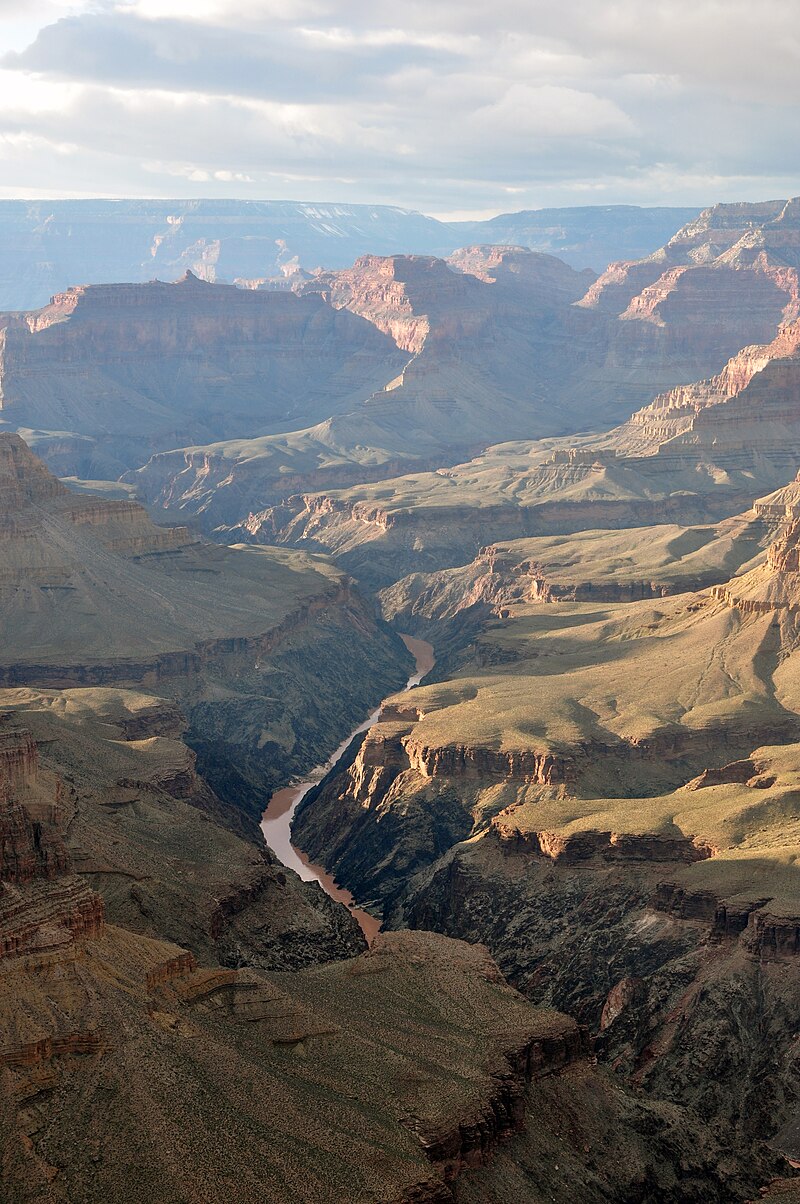
In order to explore the threats to the Grand Canyon, journalists Kevin Fedarko and Pete McBride have spent the better part of the past year exploring its wonders. Starting last fall, the two men have trekked for more than 650 miles (1046 km) through remote wilderness to not only get to understand the Canyon better, but to discover how its fragile ecosystem has increasingly become under siege by outside interests.
Along the way, they talked with people living in and around the park as the two men learned about the potential for over development and the increased stress put on the Grand Canyon due to a larger number of tourists visiting. But most importantly, they discovered that mining operations just outside the park's borders could have a long-lasting, and incredibly devastating, impact on the park itself, creating a potentially dangerous environmental catastrophe. For example, uranium is one of the substances that is mined near the park that could have severe impact on its future. In fact, U.S. Geological Survey data says that 15 springs and five wells near the Grand Canyon already have levels of uranium that are considered unsafe to drink. This is mostly due to incidents from older mines in the area, but it underscores the problem none the less.
While the story is already quite eye-opening, Fedarko and McBride aren't quite done yet. They're continuing to explore the Grand Canyon even now, with plans to wrap up their investigative expedition sometime in October. The story is of course still unfolding, but the hope is that we're not too late in spreading the word about the threats to this incredibly popular national park. After all, it is a place that has been presumably preserved for future generations to enjoy as well, so why would we want to spoil it now? Hopefully that won't happen.
Senin, 22 Agustus 2016
Video: The Best of the Grand Canyon
This week, the U.S. National Park Service will celebrate its 100th birthday in grand fashion, with all kinds of special events taking place across the country. For those of us who love the parks, this is a major milestone in their history, and one well worth commemorating. The video below comes our way courtesy of National Geographic and shares the very best vistas and landscapes from one of the most iconic parks in the entire system – The Grand Canyon. It is a good reminder of just how special these places truly are, and why having protected public lands is such an important thing. Consider that this week as we all appreciate the NPS just a bit more.
Senin, 08 Agustus 2016
Video: Nat Geo Shares Earliest Archival Footage
Want to see the earliest archival video footage from National Geographic's extensive vault of films? The video below provides a glimpse of just that as it gives viewers a look at the 1903 Ziegler North Pole Expedition. The explorers that made up that team set out from Norway with plans to reach the North Pole. But, their ship got trapped in the ice and the group ended up stranded for a year. This video gives us a look at a bygone era in exploration and a sense of what it was like for that team as they set off into the unknown. Interesting stuff to be sure.
Langganan:
Postingan (Atom)